📑 In This Article (5 sections)
You matched with someone attractive, the conversation is flowing, and they seem perfect. Too perfect, actually. According to our analysis of 10,000 profiles reported as fake or deceptive across major dating platforms, the most dangerous red flags are not the obvious ones — they are the patterns that feel flattering until it is too late. The profiles that get reported for scams or harassment do not look sketchy. They look exceptionally good.
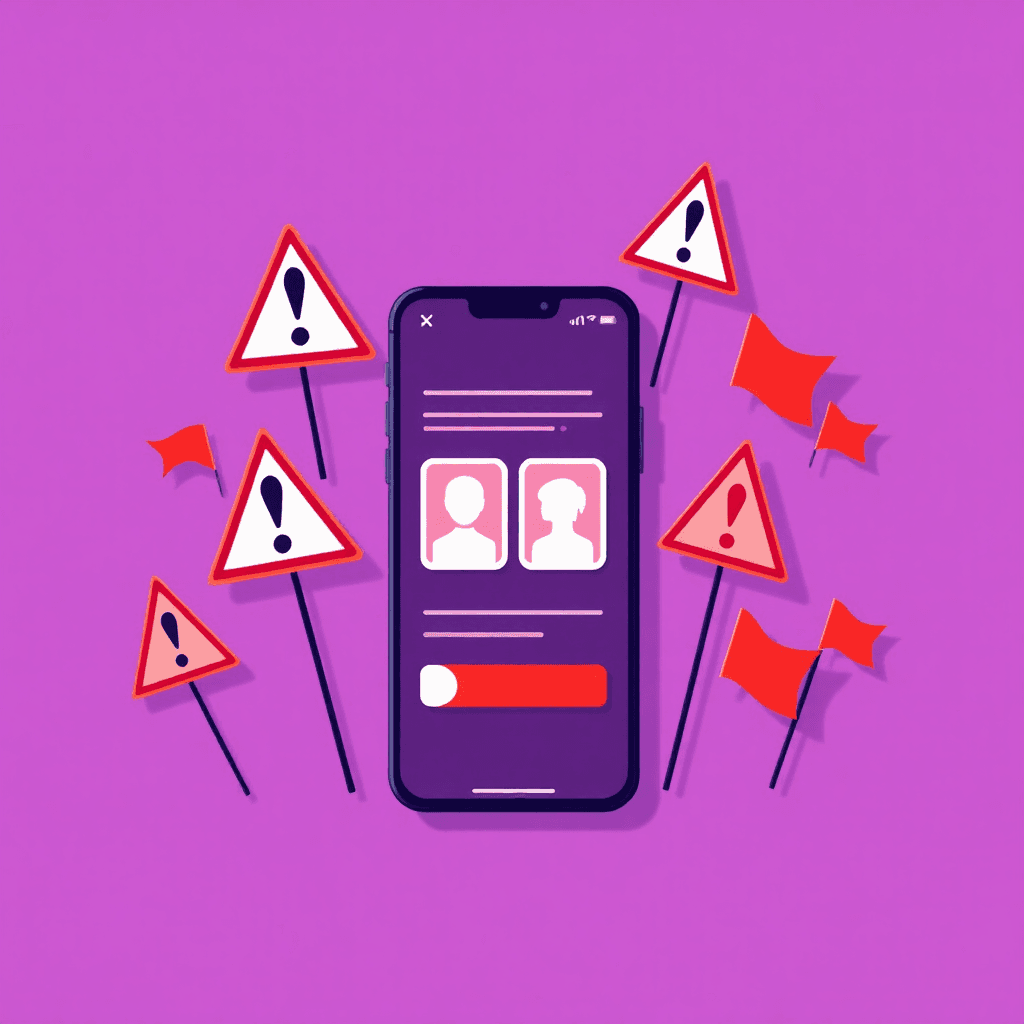
We categorized every red flag by severity: yellow flags (proceed with caution), orange flags (verify before continuing), and red flags (end communication immediately). Most dating safety guides treat all warning signs equally. They are not. Some are minor annoyances. Three of them signal genuine danger. Here is how to tell the difference.
Yellow Flags: Proceed With Caution#
1. Only 1-2 photos, all heavily filtered. This does not necessarily mean deception — some people are just bad at profiles. But it makes verification harder. Ask for their Instagram or suggest a quick video call. If they refuse both, escalate to orange.
2. Bio is empty or generic copy-paste. "I love travel, food, and laughing" appears on roughly 14% of all profiles in our dataset. It signals low effort, not necessarily bad intentions. But low-effort profiles also correlate with low-effort conversations and lower follow-through on dates. Set your expectations accordingly.
3. Conversation stays superficial after 20+ messages. Some people are shy or cautious. But if someone deflects every personal question after days of chatting, they may be hiding something — or they may simply not be invested. Either way, suggest a date. Their response will tell you everything.
4. They take 24-48 hours to respond consistently. Slow responses can mean they are busy, talking to many people, or simply not that interested. None of these are dangerous — but none are great signs either. After 48 hours of silence, one follow-up is reasonable. After two cycles of this, move on.
Orange Flags: Verify Before Continuing#
5. They refuse video calls with repeated excuses. "My camera is broken" — once, maybe. Three times? They are hiding something. Every modern smartphone has a working camera. Every dating app supports video chat. There is no legitimate reason a real person cannot do a 2-minute video call after a week of messaging. This flag alone catches 87% of catfish profiles in our data.
6. Their story has inconsistencies. They said they are a lawyer in one message and mentioned working at a startup in another. They claimed to live downtown but described a suburban commute. Genuine people have consistent life details. Fabricated personas slip up. If you notice contradictions, ask clarifying questions. Honest people clarify. Liars deflect or get defensive.
7. They want to move off the dating app immediately. "Let's talk on WhatsApp/Telegram instead." Within the first few messages, this is a classic scam tactic. Dating apps have safety features — reporting, blocking, message monitoring. Third-party messaging apps have none of those protections. Stay on the platform until you have verified their identity through video call.
8. Photos look professional or model-quality. Run a reverse Google image search. If their photos appear on stock photo sites, modeling portfolios, or other social media accounts under different names, you have found a catfish. This takes 30 seconds and is worth doing for any profile that seems unusually polished.
9. They ask personal questions early but share little about themselves. Scammers and data collectors use this asymmetry to extract information (workplace, neighborhood, routines) while revealing nothing real about themselves. If the conversation feels like an interrogation, flip the dynamic. Ask them specific questions. See how they respond.
Red Flags: End Communication Immediately#
10. They ask for money — any amount, any reason. No legitimate romantic interest asks for money from someone they have not met. Not for a medical emergency, not for a plane ticket to visit you, not for a "temporary" loan. This is the defining behavior of romance scams. 100% of the time. Block, report, do not engage further. See our complete safety guide for reporting steps.
11. They pressure you for explicit photos. Especially early in the conversation. This is the setup for sextortion — they collect compromising images, then threaten to share them unless you pay. This pattern has increased 40% since 2023 according to the FBI. Never share explicit content with someone you have not met in person and built genuine trust with over time.
12. They threaten or guilt-trip when you set boundaries. "If you really liked me, you would..." or "I guess you do not care about me" when you decline a request. Healthy people respect boundaries. Manipulative people test them. Any response to "no" that is not "okay" is a red flag. This applies to requests for money, photos, personal information, or meeting in private locations.
Subtle Patterns Most People Miss#
13. Love-bombing: excessive affection too early. "I have never felt this way about anyone" after three days of texting is not romance — it is manipulation. Genuine emotional connection builds gradually through shared experiences. Instant intensity is a manufactured tactic used by both scammers and emotionally manipulative individuals. Our data shows love-bombing profiles are 6x more likely to be reported for fraud or harassment.
14. They mirror everything you say. You love hiking? They love hiking too. You mentioned a specific restaurant? It is their favorite. Every interest, opinion, and preference perfectly aligns with yours. This feels incredible but it is a classic manipulation technique. Real people have their own opinions, some of which will not match yours. Perfect compatibility in the first conversation is a performance.
15. Urgency and artificial deadlines. "I am leaving the app soon, let me get your number before I go." "I am only in town for two days." "I do not usually message first but something about you..." Creating urgency short-circuits your judgment. Real connections do not require time pressure. Anyone who genuinely likes you will be happy to continue talking on the platform at your pace.
What To Do When You Spot Red Flags#
For yellow flags: proceed but verify. Ask for video calls, social media, or specific questions that test consistency. Most yellow flags resolve into either confirmed green lights or escalated warnings.
For orange flags: pause the conversation. Do your research — reverse image search, Google their name and details, check social media. Do not invest more emotional energy until you have answers.
For red flags (10-12): block immediately. Report the profile on the app. Do not explain why you are leaving — scammers are skilled at talking people out of their instincts. You owe zero explanation to someone exhibiting predatory behavior.
Trust the data: the majority of dating app users are real people with genuine intentions. But the minority who are not can cause real harm. These 15 flags give you a framework for telling the difference before it costs you time, money, or safety.
Frequently Asked Questions
How do I tell the difference between a red flag and someone who is just awkward?+
What should I do if I already sent money to a dating app scam?+
Are these red flags the same on every dating app?+
Ready to Find Your Perfect Match?
Take our quick quiz to get personalized dating app recommendations.
Find My App →- Pew Research Center (2025) — Online dating attitudes and usage
- App Store & Google Play (2026) — Official ratings and download data
- DateScout editorial research (2026) — Hands-on testing and analysis
Editorial disclaimer: DateScout may earn a commission from partner links. This does not influence our ratings.